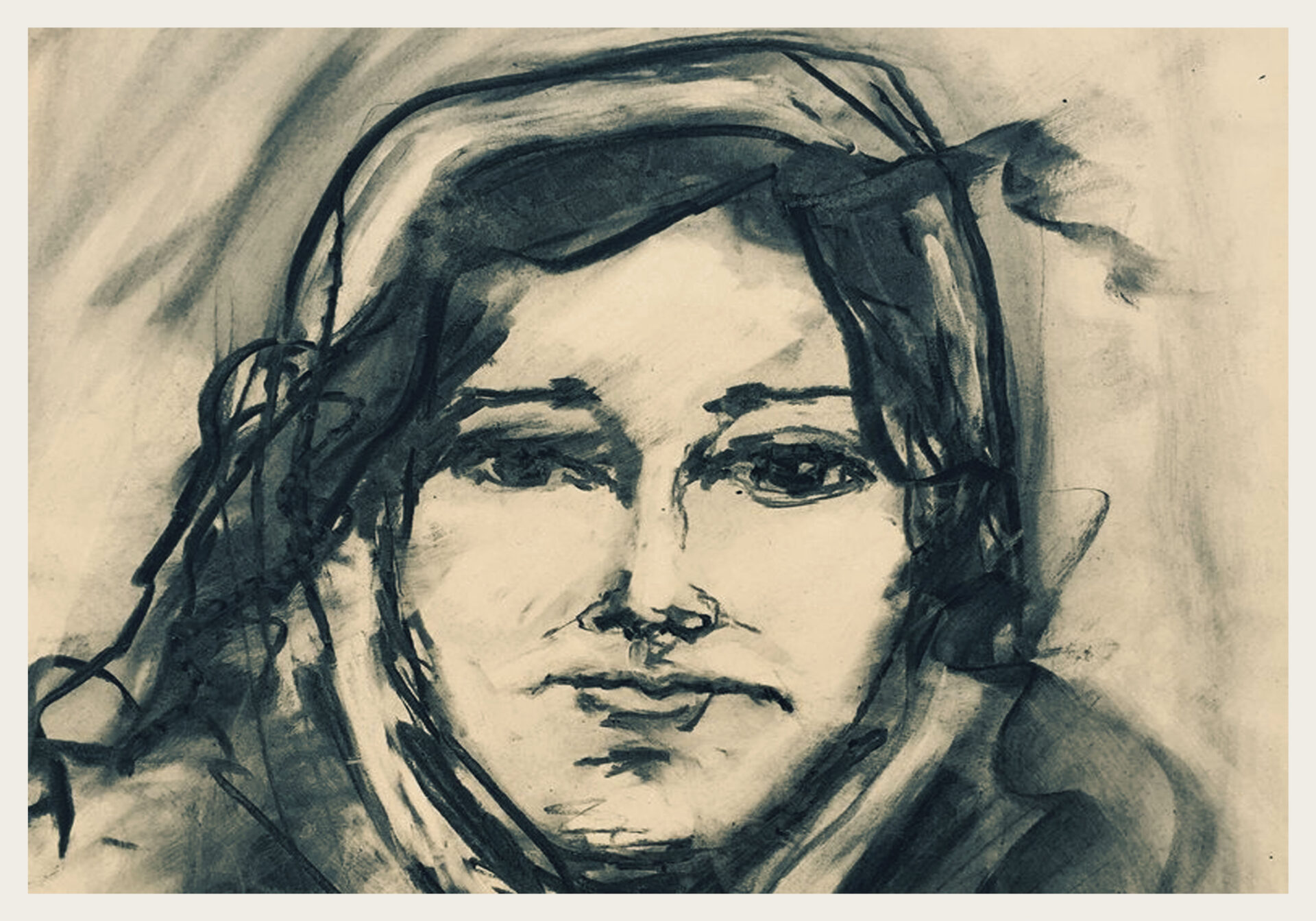
Hajrija Imeri-Mihaljić
Hajrija Imeri-Mihaijlić worked as a maid of a Jewish family in Kosovska Mitrovica, today’s Kosovo. In 1942, non-Sessian Romani people as well as Jewish from the city were deported to an internment camp. Among those arrested were Hajrija’s employer, Ester Baruch and her little granddaughter Ester, called Stela. Ester Stela’s parents, the Jew Bukica and her Serbian husband Blagoje, had already joined the partisans when they were interned.
When Hajrija learned of the arrest of her employer, she visited her with her five children in the camp. In the short time they met, Ester gave her granddaughter to Baruch Hajrija and told her that if her parents survived, she should give the child to them. If not, she asked Hajrija to raise the little Ester as her own child. No one noticed that Hajrija left the camp with a child more than she had come. She names Ester Stela Miradija from then on and raises her as one of her children in her village near Kosovska Mitrovica.
Towards the end of the war, Hajrija tells her foster daughter that she is not her biological mother and her real name, Ester Baruch. Her biological mother was called Bukica and probably died as a partisan. Nevertheless, Hajrija tries to find the family after the war. She is told that grandmother Ester Baruch disappeared in the Sajmište concentration camp and the parents of the little ones did not survive the war. Through a dispute with a neighbor, the local police report that Hajrija has kidnapped a Jewish child. The police take Ester Stela with them. Hajrija follows her on foot. Even though it’s been more than 70 years ago and she was still so small, Esther Levy, as Ester Stela is today called, remembers this emotional encounter with her foster mother, of which there is no photo, but whose face she can describe exactly.
The child is initially housed with a Jewish family in Priština. However, she refuses to eat and wants to go back to her foster mother Hajrija. Ester Stela is then placed in a children’s home in Belgrade. The little one knows the names of her biological parents from Hajrija and is united with her mother Bukica in 1945. A few months later, Hajrija visits her to make sure that Ester is doing well. Bukica has remarried and emigrates to Israel in 1948 with her new husband and Ester Stela. The fate of her father remains unknown, probably he remained at war. Many years later Esther Levy learns that her foster mother died in poverty. She contacts a member of the Yad Vashem memorial to find Hajrija’s family. In vain. Hajrija’s children cannot be found in the crumbling Yugoslavia. In 1991 Hajrija Imeri-Mihaljić was honored with the title Righteous among the Nations.