-
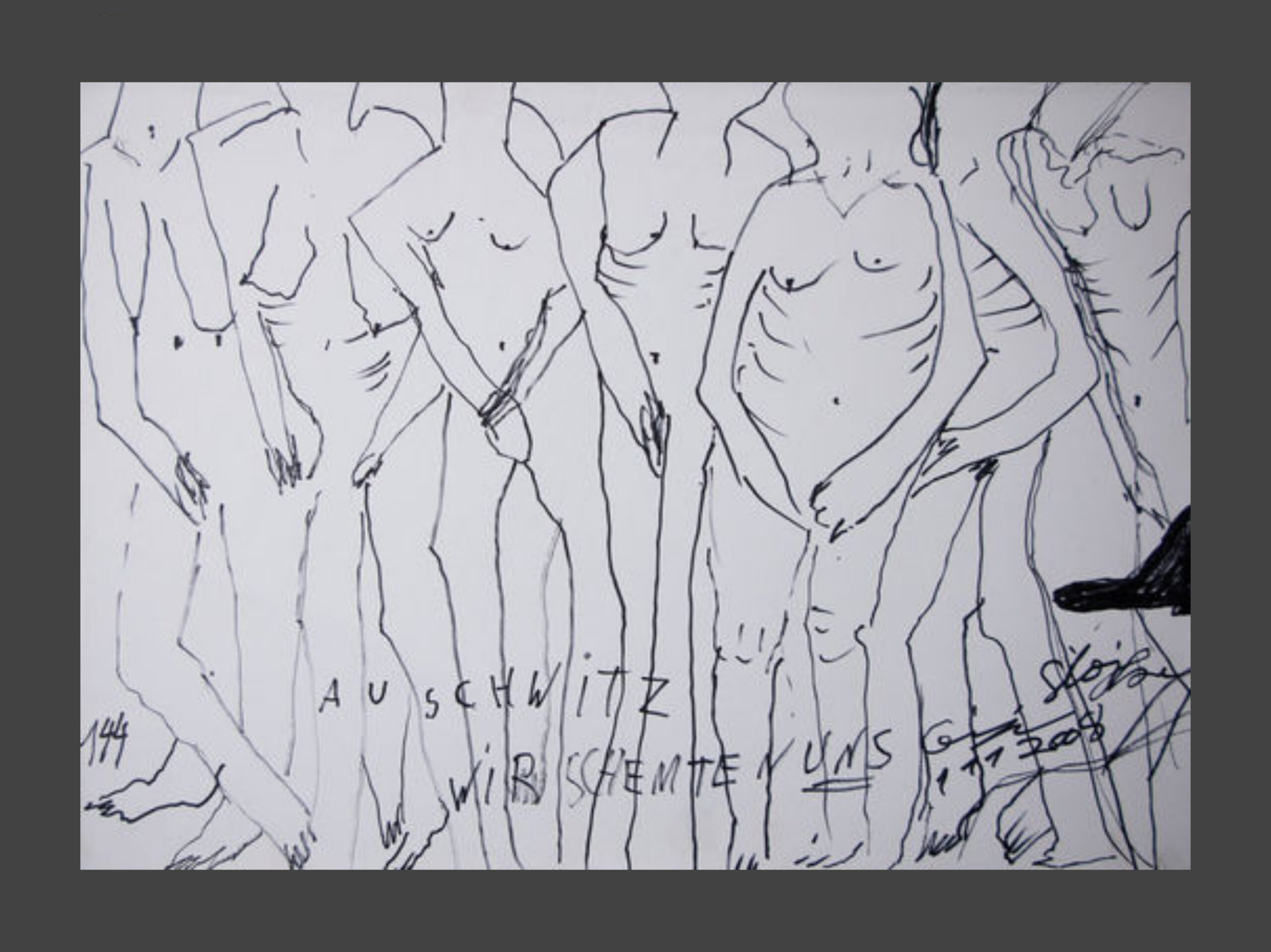
Ceija Stojka: u0026quot;Auschwitz – we were ashamedu0026quot; u003Cbru003E(© Stiftung Kai Dikhas)
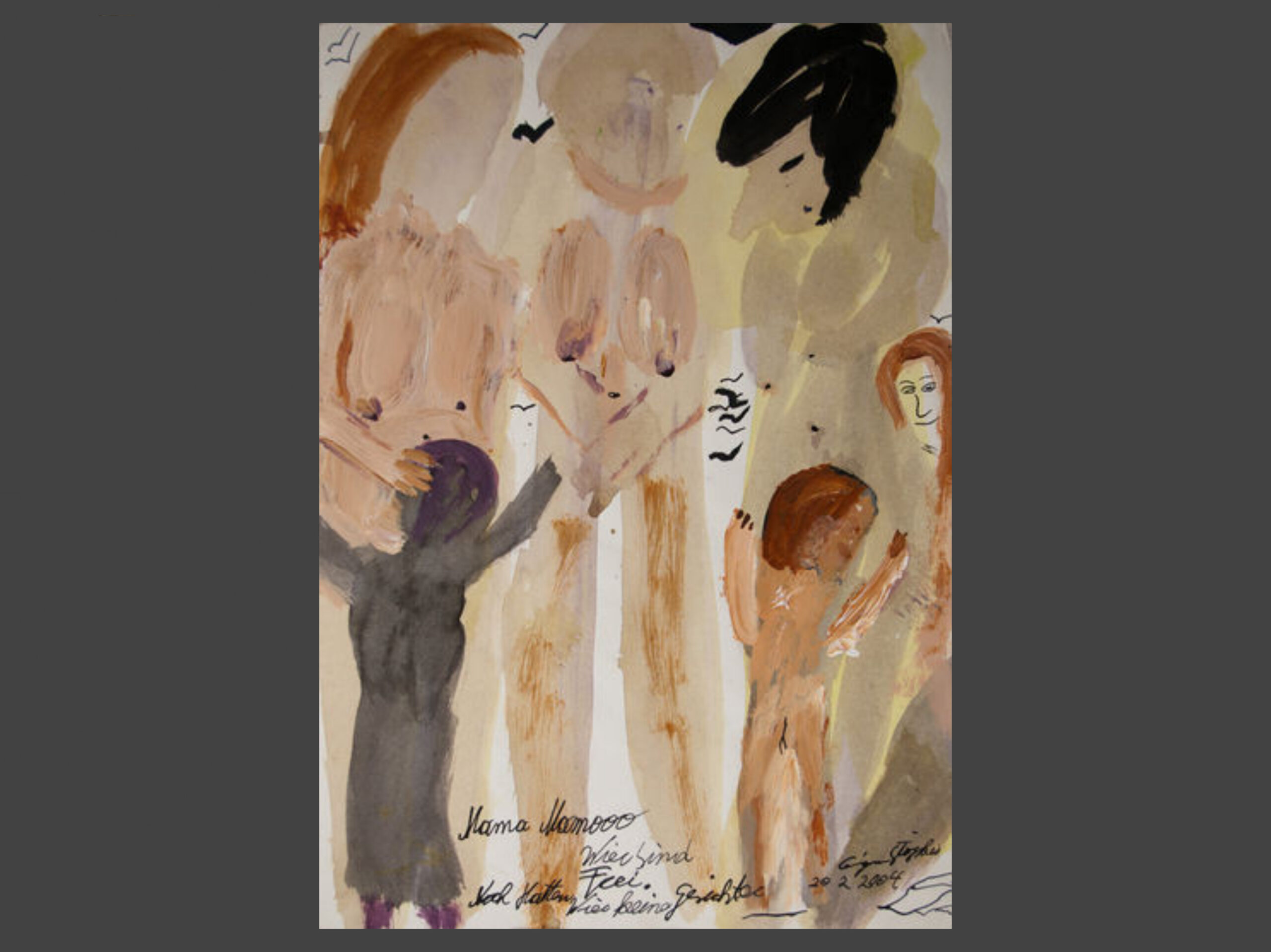
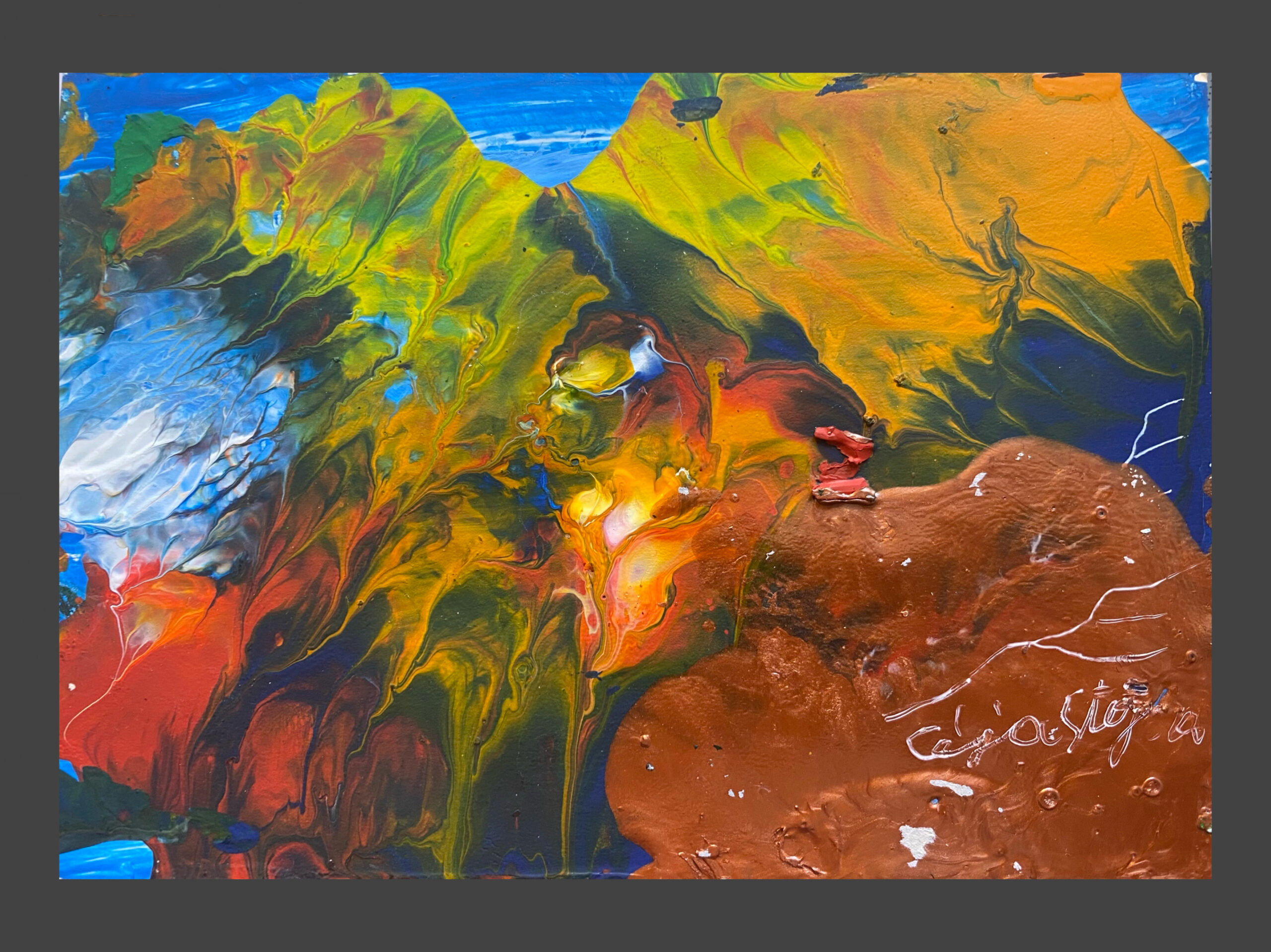
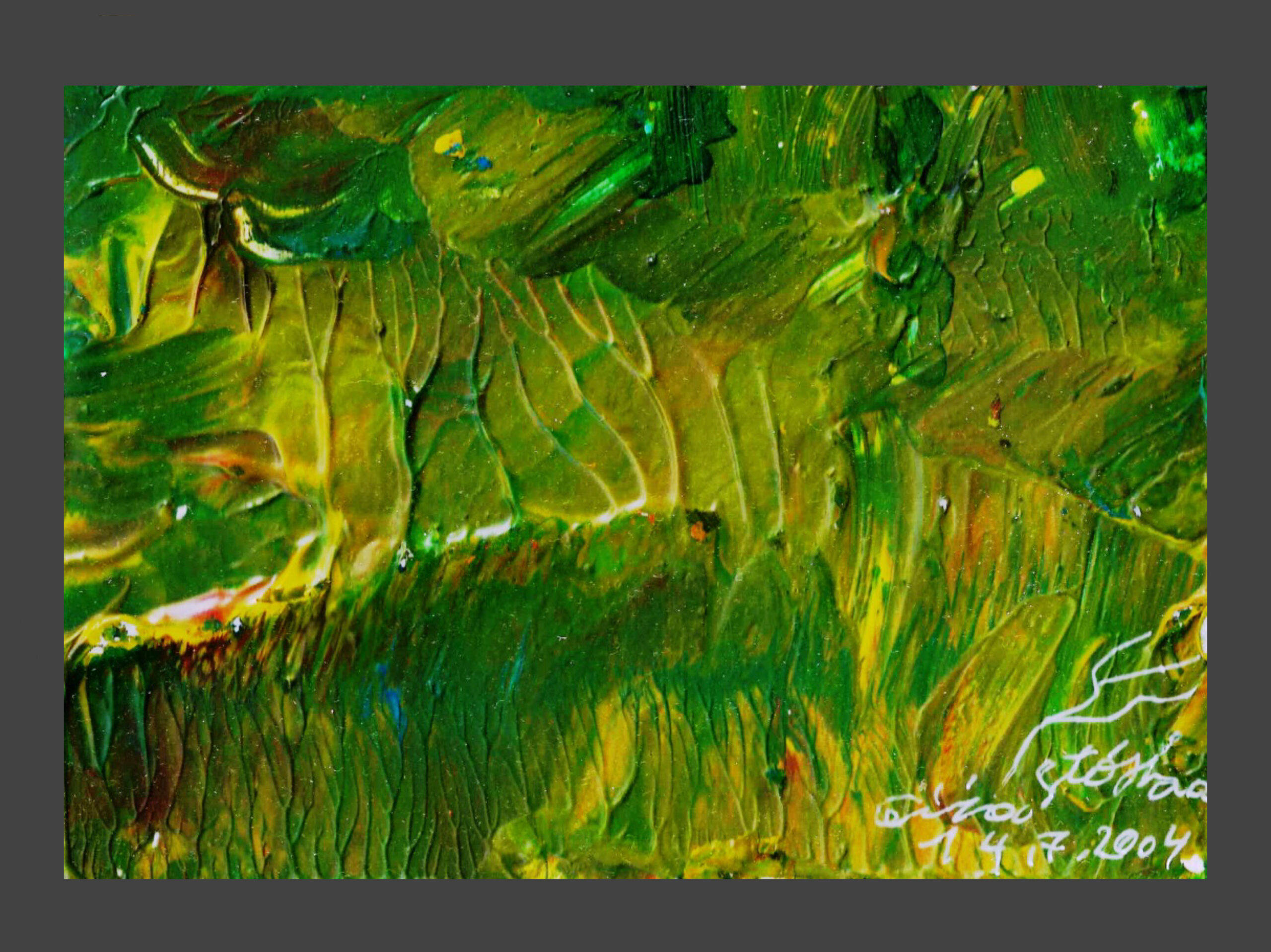
Nuna Stojka talks about her mother-in-law.
This is the branch of Bergen-Belsen.
In Bergen-Belsen, there was nothing to eat. No one came into the camps and all the soldiers and the Nazis were actually conducting everything from outside and they were always walking around in the camps. She and two young children were looking for food. Always something you can find, that you can put something in your mouth.
And then you discovered a tree and that tree was their rescue. Little leaves grew on the tree and in the middle of the tree, it was still a small tree, a young tree, there is a resin – it was still so open, how can I explain that to you? When a tree in the middle, at the top towards the crown, bends apart like this, resin has come out and they have taken this resin out and twisted it together and then they have chewed that and the leaves of course. The leaves were then their food.
And that was actually for her, yes, her tree of life. it didn’t survive. They went there again and again and got a few leaves and branches and this resin out of the tree. And that’s why, when I was with her in Bergen-Belsen, she took a branch with her that she found. In this camp she found it. It was bad how I was there with her and she then found that, somehow on that spot where they were. She could remember where this hut was, that is, this shack where she was with her mother. The tree had died of course from the many corpses that were lying around there at the time then. Yet there was still a small stump that still existed and a few such branches all dried out of course and meaningless actually. She dug it out of the ground like this and took this branch with her.
Yes, and that was her sign. This was always placed in her pictures until the end. It may be that she has not done it twice. Though, on the whole, she actually did that in all her pictures. It was like a signature a symbol of her with her signature. Sometimes she has abbreviated CS, i.e. Ceija Stojka, not the name at all, but the branch.
Later she started painting. Her drawings, her pictures are wonderful. They hang around the world. Even in America and Japan.
She was in Japan in 1989, I was not there with her. She flew with a Romni from Burgenland from here, from Austria to Japan, where she was invited. Ceija has also visited schools and kindergartens there. When she left Japan, children told her: “Please, dear Aunt Ceija, let us have something that reminds us of you.” And she said: “Okay, I’m going to send you a picture. But I was thinking of my daughter and her second granddaughter, Simona, who were children and already loved to paint and draw. She said to them: “Please paint me a picture, I have to send it to Japan.” The children didn’t really want to. And then she took the pen herself and the paper and said: “Ceija, you can do so much. You will be able to paint a picture for the children. That’s actually how it started. So she sent her first picture to Japan, to kindergarten.
All of a sudden, she came up with it and felt like it. She liked to paint. Then she took black-and-white pictures, with very, very bad terrible faces, with boots, with the barbed wire and what she just experienced there. From the perspective of a child. She was ten at the time and so she often painted it. She had never learned that.